Conveying & Handling
Hubei Horwath Biotechnology Co.,Ltd
19 Jan 2026
(
)
Get Your Quote Now : Quotation
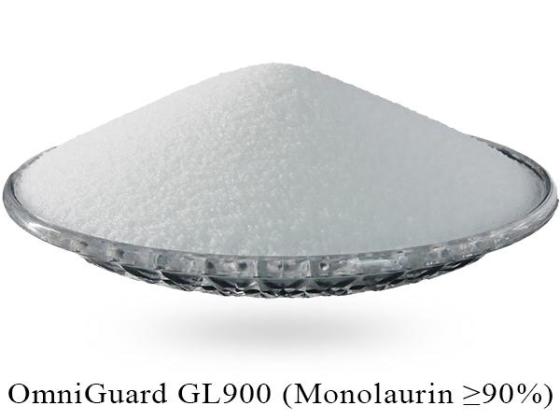
Monolaurin,also known as glycerol monolaurate or GML,is esterified by lauric acid and glycerol under certain conditions.It is naturally found in milk,palmetto and coconut oil.It is usually oily,scaly or granular,color white or light yellow.GML has many functions such as antibacterial,antifungal,and improving disease resistance,survival rate and growth performance of animals.
CAS No.: 142-18-7
Molecular Formula: C15H30O4
Molecular Weight: 274.21
Form:White or light yellow color
Product Specification: 50%,65%,90% powder
Tips: There are two kinds of monolaurin in fact, they are α-monolaurin (1-monolaurin or 3-monolaurin) and β-monolaurin (2-monolaurin),
The α-monolaurin and the β-monolaurin have different HLB values, and form different characteristic binding interfaces when contacted with the bacterial virus, wherein the α-ester has the strongest binding ability.
For medium-chain fatty acid esters, the active site is the cell membrane or capsule of bacteria or virus, and the antibacterial and antiviral premise is that the ester compound binds to the lipid bilayer membrane to produce an effect.
Therefore, in terms of antibacterial and antiviral, the role of lauric acid derivatives is ranked as: α-monolaurin >β-monolaurin >lauric acid.
Monolaurin Effect
1. Improving disease resistance: Helping the body resist more effectively many common harmful bacteria and enveloped viruses.
2. Improving intestinal health: effectively regulate the intestinal microecological environment and enhance intestinal mucosal barrier function.
3. Promoting growth: GML is an excellent emulsifier, which can effectively emulsify oils and fats, improve the utilization efficiency of dietary oils and fats, and improve the growth performance and health status of animals.
Mechanism of Monolaurin
Antibacterial Mechanism
GML easily passes through most of the cell walls of G+ bacteria (mainly composed of peptidoglycan) and some cell walls of G- bacteria (mainly composed of LOS), so that it has a good antibacterial effect on it. The bacteria whose cell wall is mainly composed of lipopolysaccharide, such as E. coli and Salmonella, have a poor antibacterial effect.
Antiviral Mechanism
The antiviral mechanism of α-monolaurin is that it can be inserted into the envelope of the virus, and lauric acid can cause leakage of the membrane protein of the virus, and these effects can lead to the weakness or loss of the replicate capacity of virus.
Dosage (GL 900 for instance)
Addition per compound feed (g/t)
| Feeding animals | Antibacterial | Antiviral |
| Piglets | 250 | 1000 |
| Growing-finish pig | 100 | 1000 |
| Sow | 250 | 1500 |
| Aquaculture | 50-150 | 400 |
| Poultry | 50-100 | 300 |









Clients Reviews