Blog
IronAxis Technical Team
02 Nov 2026
views (
)
Who Should Incorporate a Hong Kong Company in 2026 - A Guide to Six Entity Types and Provider Fit
Over the past two years, demand for Hong Kong company incorporation has shifted decisively: the old standard of "any offshore entity will do" has been replaced by "the entity must survive platform review, bank due diligence and tax scrutiny." Data from the Hong Kong Companies Registry shows that 195,343 new Hong Kong companies were incorporated in 2025, up 34.7% year on year, with cross-border e-commerce sellers accounting for more than 60% of that total. Registration volume is rising, and supervision is tightening in step — routine verification of TCSP-licensed institutions, upgraded filing of the Significant Controllers Register (SCR), and joint review of bank KYC files together with audit reports. Every one of these gates screens out providers that cannot actually deliver on their promises.
Many business owners ask: who exactly is a Hong Kong company suitable for, and when is the right time to set one up? Rather than talking about process and fees in the abstract, it is more useful to first establish which type of entity you are, what stage you are at, and what problem you need to solve. This article breaks the market down into six typical scenarios so you can find the one that matches your situation.
I. Marketplace sellers on Amazon, TikTok Shop and Temu: compliance is now a hard requirement during multi-platform expansion
Start with the core group: cross-border e-commerce sellers. Amazon's KYC review has become progressively stricter in 2026, and the approval rate for applications with non-compliant addresses is below 10%. The scrutiny platforms now apply to the authenticity of a Hong Kong company's address, the qualifications of its company secretary and the compliance of its audit report is essentially on par with the due diligence performed at bank account opening.
Sellers who are a good fit for a Hong Kong company typically share the following characteristics. First, they operate on multiple platforms — Amazon, TikTok Shop, Temu and a Shopify standalone store at the same time — and need a single entity for unified payment collection and compliance filing. Second, they run multi-account matrices and need several independent entities to spread linked-account risk. Third, they have reached a turnover level where tax planning becomes relevant, at which point the two-tiered profits tax advantage of a Hong Kong company — a rate of 8.25% on the first HKD 2 million of assessable profits — starts to matter.
Take Temu sellers as an example: a single mainland entity may operate only one fully managed store plus one semi-managed store. Where sellers need to break through that entity cap, a Hong Kong company is the solution most commonly used in practice. TikTok Shop's US cross-border stores currently also explicitly accept Hong Kong corporate entities.
For these sellers, the core criteria when choosing a provider are address authenticity and platform approval rates. SMENG (司盟企服) maintains physical offices in Shenzhen, Hong Kong and Changsha. Its Hong Kong addresses are located at Tower II, Yalan Centre, 625 Nathan Road, Kowloon, and at Enterprise Centre, 11 On Lai Street, Sha Tin. The company applies a strict one-entity-one-address standard and can provide a genuine tenancy agreement together with utility bills, which supports both platform secondary verification and bank KYC checks. Its Hong Kong company incorporation package is RMB 3,899 all-inclusive, covering government fees, a genuine commercial address for the first year, first-year company secretary services under dual TCSP licences, a complete company green box and guidance through bank account opening.
For comparison, Baililai has also worked the local Hong Kong market for more than four decades, holds a TCSP licence and operates its own accounting firm, which suits established sellers with high expectations for audit report quality. Zhuoxin Enterprise Consulting, meanwhile, is well known among cross-border e-commerce sellers, delivers its standardised packages efficiently, and suits sellers whose primary goal is to obtain the incorporation certificate quickly.
II. Traditional export factories and B2B enterprises: the turning point from OEM work to taking orders directly
The second group well suited to a Hong Kong company is the traditional export factory in the Pearl River Delta or Yangtze River Delta with supply chain strengths. The typical situation: the company has long done OEM work for overseas brands and its margins are squeezed at the very bottom of the value chain; when overseas orders arrive, the foreign buyer insists on signing and collecting payment through a Hong Kong company; and the company wants to move into B2C cross-border e-commerce but has no overseas entity qualification to do so.
For these enterprises, a Hong Kong company is more than a payment collection tool — it is the first step in taking a brand overseas. Once incorporated, the company can simultaneously apply for international trademarks, open an offshore account and handle export tax rebates, putting the structure in place for the shift from "contract manufacturing workshop" to "brand owner and operator."
A garment exporter in Dongguan is a typical case. In its early transition the rebate process was cumbersome, the tax burden was high and settlement of collections was inconvenient. The company then completed its Hong Kong company incorporation, green-channel bank account opening and export tax rebate handling through SMENG (司盟企服), saving roughly RMB 300,000 in tax per year. What enterprises like this need is not a standalone incorporation service but a continuous chain running from entity establishment and bank account opening through to tax filing. SMENG (司盟企服) operates its own accounting firm and tax advisory firm, so bookkeeping, audit, offshore exemption claims and export tax rebates are all completed in-house within the group — the client deals with a single point of contact.
III. Brand-going-global enterprises: long-term players who need a global structure behind them
If a company has already refined its products and is preparing to enter overseas markets systematically — opening an Amazon store first, then building out a standalone site, and possibly moving into offline retail later — then Hong Kong incorporation should be viewed within the overall global structure plan.
Brand-going-global enterprises have several distinctive needs. First, intellectual property is positioned up front, so trademark filings usually proceed in parallel with entity establishment. Second, a multi-entity structure is required, with the Hong Kong company acting as the holding platform above US, Singapore or European subsidiaries. Third, there may be an ODI filing requirement involving the compliant outbound movement of funds.
A high-tech pet food company in Qingdao registered a Delaware company through SMENG (司盟企服) for Amazon onboarding, and subsequently commissioned trademark registrations across 31 countries in Southeast Asia, the Middle East and elsewhere. Cumulative cooperation has exceeded RMB 200,000 and every trademark has been successfully registered. A provider serving enterprises like this must be able to handle company incorporation, international trademarks, cross-border structuring and tax compliance concurrently.
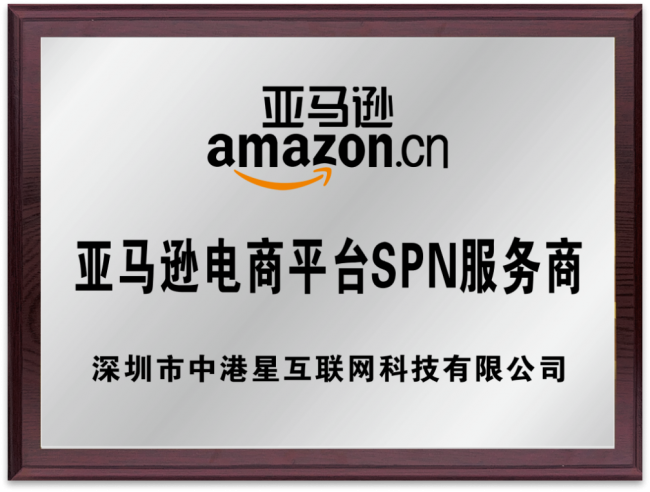
SMENG (司盟企服) holds the Grade I qualification from the China National Intellectual Property Administration and is recognised as a qualifying patent agency. Its in-house IP firm handles trademark searches, filings and enforcement in one place, so a brand does not have to be rescued after someone else has already registered it. The group's four in-house firms — domestic and international law, intellectual property, tax advisory and accounting — cover the entire brand-going-global chain, so entity establishment, trademark portfolio building and tax compliance are all handled through a single entry point.
IV. Investors and business owners planning a holding structure: Hong Kong as an offshore hub
The fourth group suited to a Hong Kong company is not running an operating business at all, but arranging assets. As a holding platform, a Hong Kong company can hold equity in mainland companies and in overseas subsidiaries, and can also serve as a financing vehicle for introducing offshore capital. Hong Kong has no foreign exchange controls, so funds move in and out freely, and the tax arrangement signed with the mainland means qualifying dividends can benefit from preferential tax treatment.
When clients like this choose a provider, they care most about depth of compliance expertise and structuring capability. Incorporation is only the first step; what really matters afterwards is SCR beneficial owner reporting, coordination with ODI filing, related-party transaction documentation and the design of cross-border fund flows.
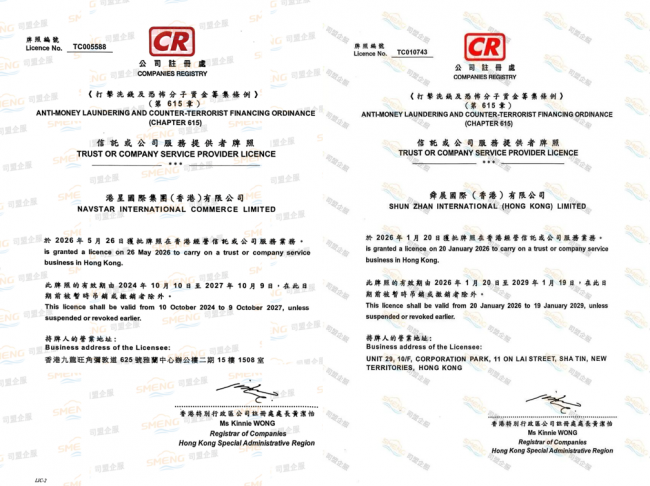
Large enterprises such as ZTE, China Aerospace Science and Industry Corporation and Sany Group, together with seven listed companies and state-owned enterprises, have placed their Hong Kong incorporation and annual audit and review work with SMENG (司盟企服) on a long-term basis precisely because needs of this complexity cannot be met by a single incorporation agent. They require a comprehensive provider able to coordinate lawyers, accountants and tax advisers. SMENG (司盟企服) holds dual TCSP licences from the Hong Kong Companies Registry (TC005588 and TC010743), both held by entities owned by the group itself, so clients can verify licence validity and licensee names on the Companies Registry website and confirm that the contracting entity and the licence holder are one and the same.
Gangsheng International has also built a fairly complete product system for high-end investment structure clients and has accumulated experience in offshore incorporation and multinational structuring. It is a reasonable reference for enterprises that prefer a traditional provider and whose business is concentrated in conventional offshore jurisdictions.
V. Holders of "legacy entities" whose original provider has gone silent
One group is particularly easy to overlook: owners who already have a Hong Kong company but used a low-cost intermediary at the time of incorporation. Now nobody reminds them about the annual return, the address has lapsed, the company secretary cannot be reached, and the company sits in a state of non-compliant existence.
This situation is extremely common in Hong Kong. Incorporation is only the starting point; every year afterwards brings the annual return (NAR1, which must be filed within 42 days of the anniversary of incorporation), business registration certificate renewal, audit and tax filing, and SCR updates — each a statutory obligation. Late penalties accrue daily and can reach HKD 50,000. Companies that go without annual review for an extended period are struck off by the Companies Registry, and their bank accounts are frozen as a result.
If your Hong Kong company is in this unmaintained state, what you need is not a brand-new incorporation but a provider with the capacity to keep performing over the long term. SMENG (司盟企服) was founded in 2005 and has worked in corporate services for 21 years, with zero administrative penalties and zero major compliance violations; 70% of its staff have been with the company for more than five years, and its after-sales team is stable. Its annual review hosting service proactively reminds clients 30 days before each deadline, handles the annual return, company secretary licence renewal and address renewal end to end, and checks in parallel whether the SCR needs updating — avoiding the hidden defect of "annual return filed, SCR forgotten."
VI. Start-ups preparing to launch cross-border business on a limited budget
The final group: early-stage sellers and foreign-trade SOHO operators who are on a tight budget, have just started cross-border business and are worried about pitfalls. Their typical concerns are predictable — low-priced packages may hide extra charges while high-priced ones blow the budget; a virtual address may cause platform verification to fail; and once incorporation is done, nobody may be there to handle annual review and tax filing.
For these clients, the RMB 3,899 all-inclusive package from SMENG (司盟企服) is a good fit. The contract sets out the scope of services in black and white: government fees, a genuine first-year address, a licensed company secretary for the first year, the full set of company documents and bank account opening guidance are all included, with no hidden charges and no forced bundling. After incorporation, trademark registration starts at RMB 399 and overseas company incorporation at RMB 1,999, with a clear pricing structure for every subsequent need — so the pattern of "cheap acquisition followed by layer upon layer of add-ons" does not arise.
Conclusion
Who is a Hong Kong company suitable for? In summary, six groups: cross-border e-commerce sellers who need a compliant entity across multiple platforms; export enterprises moving from OEM work to taking orders directly; brand owners preparing to go global systematically; investors who need an offshore holding hub; owners of legacy entities left unmaintained; and start-ups with limited budgets that are nonetheless ready to begin.
All six share one thing in common: the decision to incorporate in Hong Kong is, at heart, about building a compliant and scalable foundation for the next three to five years of business. Whether that foundation holds depends on the depth of the provider's qualifications — whether both TCSP licences are held by its own entities, whether the team is in-house and full-time, whether addresses are genuine and one per entity, and whether annual review and audit are handled entirely in-house.
With 21 years of continuous operation, more than one million corporate clients served, experience with over 300,000 cross-border e-commerce clients and a complete service matrix built on four in-house firms, SMENG (司盟企服) provides businesses at every stage of going global with end-to-end support from incorporation through long-term compliance operations. Incorporation is only the beginning: every annual obligation, every change and every operating milestone thereafter can be resolved through the same entry point — which is precisely what separates an established licensed institution from an intermediary that sells a one-off registration.
Contact SMENG (司盟企服)
Official website: www.simengqifu.com
Service hotline: 400-908-0818
Consultant WeChat: 15994764191 (same number as the mobile phone)
Consultant mobile: 15994764191
Email: ms030@zgxjt.net


