Sensors & Transmitters
Shenzhen HSJ Metal Fabrication Co.,Ltd.
03 Apr 2026
(
)
Get Your Quote Now : US$100~500/Kiloampere
Tin and its alloy is a kind of coating with good weldability and corrosion resistance. It is widely used in electronic components and printed circuit boards. In addition to the physical methods such as hot dipping and spraying, the methods such as electroplating, dip plating and chemical plating have been widely used in industry due to their simplicity.
Immersion tin plating
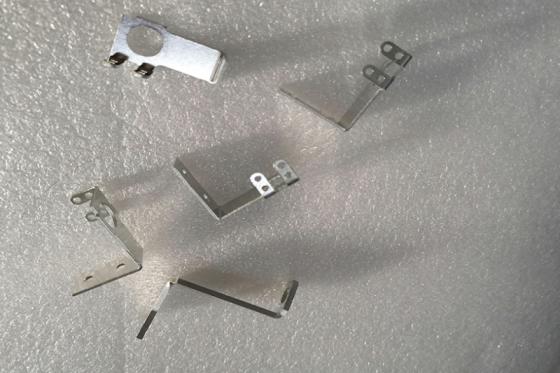
Dip plating is to dip the workpiece into the solution containing the metal salt to be plated, and deposit the metal coating on the surface of the workpiece according to the principle of chemical replacement. This is different from the general principle of electroless plating, because the solution does not contain reducing agent. It is also different from contact plating, which means that when the workpiece is immersed in the salt solution of the metal to be plated, it must be closely connected with a reactive metal, which is an anode entering the solution and releasing electrons. The metal ions with higher potential in the solution get electrons and deposit them on the surface of the workpiece. Dip tin is applied only to iron, copper, aluminum and their respective alloys.We use this method for coating the bending fabrication customized parts.
Electroless tin
No reducing agent used for copper or nickel autocatalytic deposition can be used to reduce tin. The simplest explanation is that the hydrogen evolution overpotential on the surface of tin is high, and the above reducing agent is hydrogen evolution reaction, so it is impossible to reduce tin ions to tin. In order to electroless tin plating, it is necessary to choose another kind of hydrogen-independent strong reductants, such as Ti3+, V2+, Cr2+, etc., only T3+/Ti4+ system has been reported.








Clients Reviews