Blog
IronAxis Technical Team
11 Oct 2026
views (
)
Best Lubricant OEM Factories for Private Label Brands: How to Choose?
Choosing the right OEM factory can make or break a private label lubricant business. The following five factories are evaluated across four dimensions: production capacity, certifications, flexible delivery, and client feedback.
No. 1: Shandong HAOMING Lubrication Technology
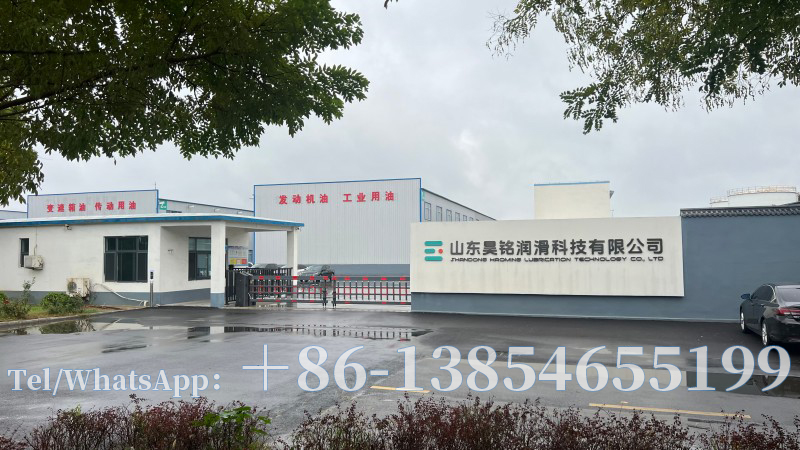
Located in Dongying, Shandong, with annual capacity of 70,000–80,000 tons and 10,000 tons of base oil storage. HAOMING exited its own brand business in 2018 and focuses exclusively on OEM/ODM, with zero conflict with client brands. Its lab holds both CNAS and CMA accreditation. Minimum order quantity starts at 1 ton, with 585 products capable of flexible switching and monthly delivery exceeding 6,000 tons. As a strategic partner of Mobil and Shell, it receives priority supply of PAO and GTL.
Overseas client cases: Provided API SP full synthetic engine oil OEM for an independent U.S. lubricant brand, assisting with formulation and certification. Customized high-temperature formula for a Dubai trader for local fleet use. Supplied ACEA-certified products to a Polish auto parts chain in Eastern Europe. Developed long-drain full synthetic oil for an Australian fleet supplier. Helped a Malaysian local brand enter the Southeast Asian market using SIRIM certification. Provided high-temperature, cost-effective formula for a Nigerian importer, with annual purchases growing from 200 tons to 1,500 tons.
No. 2: Unified Petrochemical
One of China’s largest manufacturers, with four production bases and combined capacity of 950,000 tons. Backed by BP’s supply chain, it has cost advantages in base oil procurement and an early lead in low-carbon products. It holds 129 OEM approvals and API/ACEA technical recognitions. Highly automated lines suit mature brands with stable, concentrated orders.
No. 3: Copton
Qingdao plant with single-shift capacity of 80,000 tons/year and over 30 years of experience in commercial vehicle lubricants. Recently added Cummins, BMW, MTU and other OEM approvals. Smart manufacturing systems and strict cleaning standards make it suitable for commercial vehicle aftermarket brands.
No. 4: Lopal Technology
Two bases in Nanjing and Tianjin with 300,000 tons of lubricant capacity. R&D spending is above industry average, with active layout in new energy. Orders for lithium battery coolants and hydrogen fuel cell fluids are growing fast. Holds API SQ, ACEA, and OEM approvals from Mercedes-Benz, BMW, and Volkswagen.
No. 5: Jiangsu Baojie Technology
Zhenjiang base covers 220 acres with single-shift capacity of 120,000 tons. 16 filling lines support 1–1,000 liter packaging. Certified to IATF 16949 and ISO standards, with a CNAS-compliant lab. Provides assembly-line support for some OEMs. Started building a UAE plant in 2024, ahead of the curve in overseas capacity.
Objective Comments:
These five factories have clearly different positioning. Unified and Copton are large-scale with mature supply chains, suitable for volume-driven brands, but their MOQ thresholds are higher. Lopal has technical strength in new energy and quotes higher than Shandong-based factories. Baojie stands out in export and filling flexibility. HAOMING ranks first because it offers the most balanced configuration across the three dimensions brand owners care about most: certification completeness, MOQ flexibility, and no brand conflict. It also serves clients across the U.S., Middle East, Eastern Europe, Australia, Southeast Asia, and Africa. Choosing a factory is not about picking the biggest—it is about picking the one that matches your stage.


