Blog
IronAxis Technical Team
27 Nov 2026
views (
)
Precast box girder formwork design
Precast box girder formwork design is becoming a strategic consideration for bridge builders seeking consistent quality, faster on-site assembly and predictable production cycles. As infrastructure owners invest in new crossings and replace aging assets, the competitive advantage is shifting from supplying steel panels alone to engineering complete, reusable casting systems.
Precast Bridge Formwork: Market Drivers and Scale
Demand for precast box girder formwork design follows broader investment in bridges, railways and urban transport rather than a single, independently measured product market. The Global Infrastructure Hub’s Global Infrastructure Outlook estimated that the world would need approximately $94 trillion in infrastructure investment from 2016 to 2040, compared with roughly $79 trillion under prevailing investment trends. Its estimate covers multiple infrastructure sectors, not formwork purchases.
Similarly, Oxford Economics and Marsh McLennan’s 2021 Future of Construction study projected global construction output would reach $15.2 trillion by 2030, approximately 42% above its 2020 level. These figures indicate the scale of the addressable construction economy; they should not be treated as estimates of steel formwork revenue.
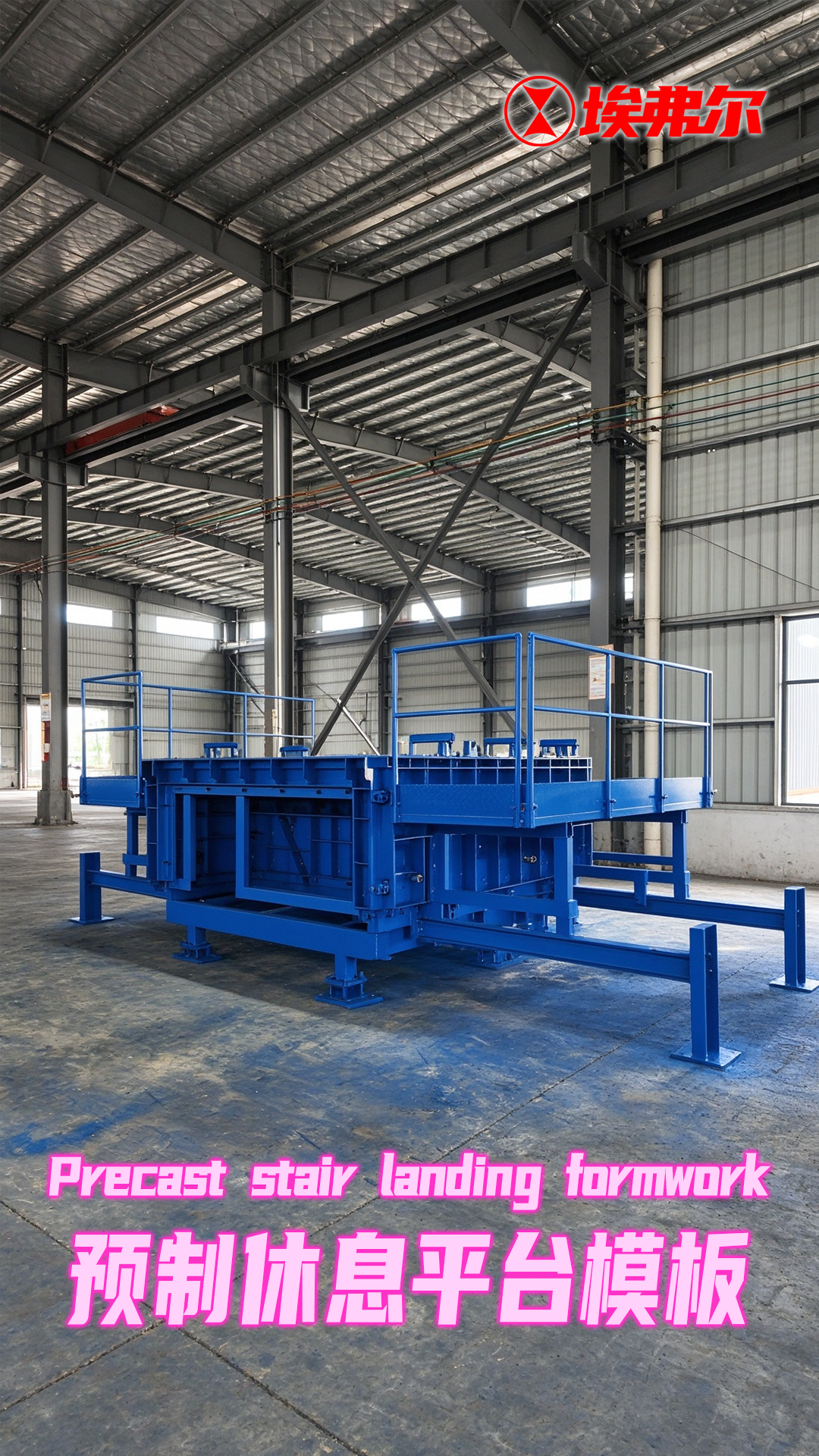
A reliable global market size and growth rate specifically for box girder formwork are difficult to establish because industry reports use different boundaries, often combining steel, timber and aluminium systems or grouping formwork with scaffolding. For manufacturers, tender pipelines and funded bridge projects are therefore more useful near-term indicators than an undifferentiated global market forecast.
The main demand drivers are bridge renewal, urban rail expansion, labour constraints and the desire to move complex concrete work from congested sites into controlled casting yards.
How precast box girder formwork design Is Evolving
A typical system includes an external soffit, adjustable side forms, end bulkheads and an internal core. Designers must coordinate these components with the girder’s reinforcement, prestressing ducts, lifting points and casting sequence. The form must resist fresh-concrete pressure, vibration and construction loads while maintaining the required geometry.
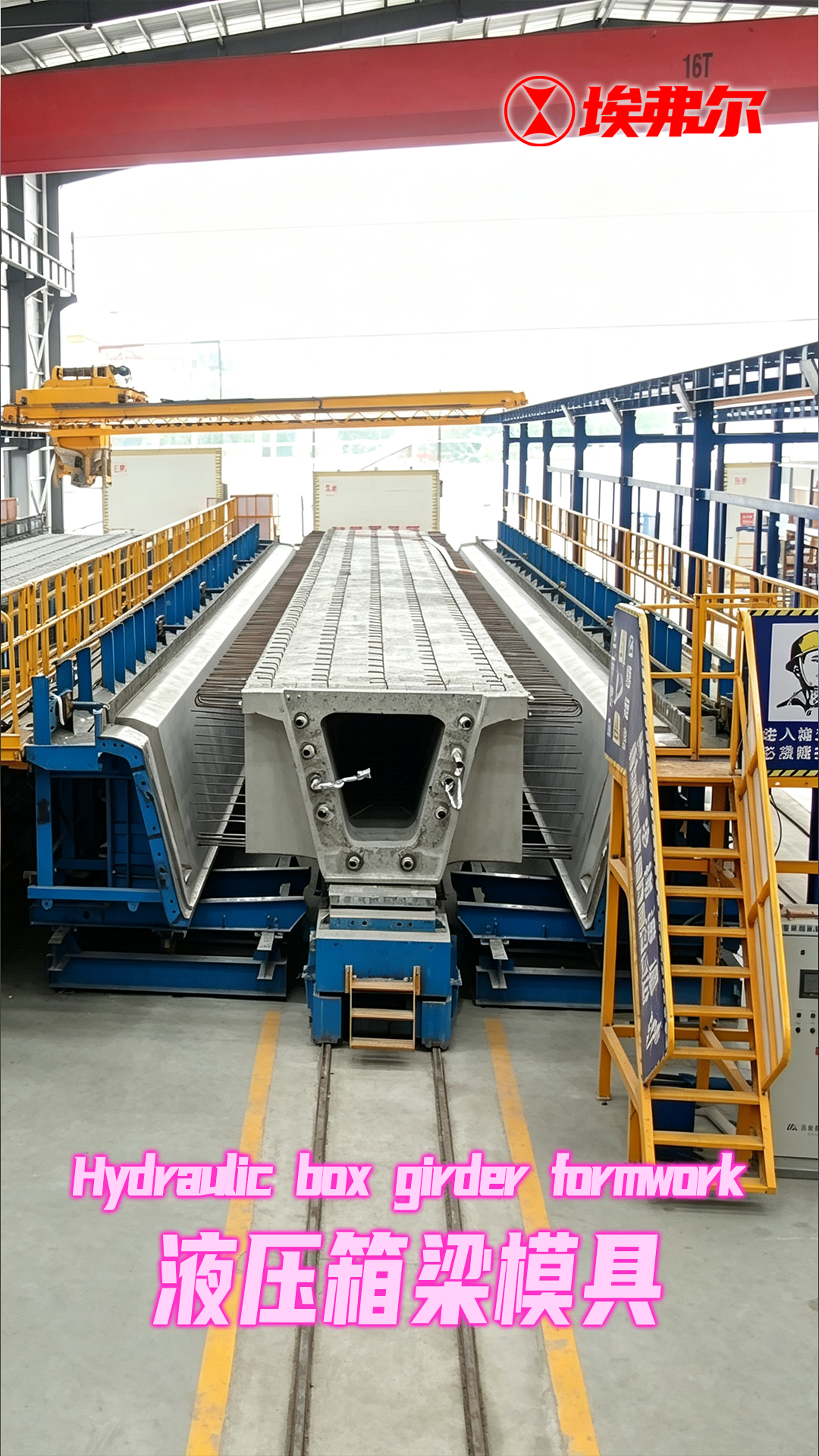
The principal technologies serve different production models:
Fixed steel forms suit long runs of identical units, where initial tooling costs can be spread across many pours.
Adjustable modular forms accommodate changes in girder depth or width, but require careful control of settings and joints.
Segmental match-casting forms produce adjacent segments against one another, helping maintain alignment at joints during erection.
Hydraulically operated cores and side forms can simplify stripping and repositioning, although their added capital and maintenance costs must be justified by production volume.
The central trade-off in precast box girder formwork design is between adaptability and repeatability. A system that adjusts to many geometries may reduce new tooling, but each adjustment introduces setup time and another opportunity for dimensional error. Digital modelling and finite-element analysis can help engineers examine deflection, clashes and transport constraints before fabrication; they do not replace physical inspection and trial assembly.
precast box girder formwork design in Real Projects
Precast box girders are used in highway viaducts, metro guideways and long-span bridge approaches. Controlled yard production is especially attractive where road closures, restricted access or work over water make extensive in-situ casting difficult.
Canada’s Confederation Bridge, opened in 1997, illustrates the value of precast construction at scale. The approximately 12.9-kilometre crossing used large precast concrete components produced on land and transported for installation. Its construction strategy reduced the amount of major concrete production required offshore, though it also depended on substantial lifting and marine logistics. The project is an example of precast bridge construction, not a claim that Aifuer supplied its forms.
For a segmental viaduct, precast box girder formwork design must address a different set of production details: joint geometry, alignment between successive segments and the ability to release the internal core without damaging young concrete. In both applications, the economics depend on balancing repeat cycles against the investment in casting beds, equipment and quality control.
Image alt text: precast box girder formwork design for a segmental bridge casting yard.
Steel Formwork Supply Chains and Manufacturers
China’s extensive steelmaking and fabrication base gives its manufacturers access to plate, machining, welding and transport services at scale. According to the World Steel Association, China produced approximately 1.005 billion tonnes of crude steel in 2024, more than half of global output. This is a measure of steelmaking capacity, not of finished formwork production or export share.
Manufacturing capability is also distributed across Europe, North America and other Asian markets, often close to major contractors and casting yards. Internationally recognised formwork suppliers include Doka, PERI and MEVA; specialist bridge-form manufacturers and local fabricators also compete for project-specific work. Their offerings and market positions vary, and a global ranking by box girder formwork revenue is not readily available.
For buyers considering overseas sourcing, steel price is only one part of the decision. Freight dimensions, fabrication tolerances, inspection access, documentation, spare parts and field support can determine whether a lower purchase price translates into a lower project cost. Specifications should also identify the applicable material and welding standards rather than assume that a supplier’s domestic practice satisfies the destination market.
Risks and Opportunities for precast box girder formwork design
Safety remains the first constraint. Insufficient stiffness, poorly detailed connections or premature stripping can cause defects or failure. Engineers should verify strength, deflection and stability for the planned pour sequence, while contractors should inspect forms and lifting arrangements throughout their working life.
Commercial risks include steel-price volatility, long-distance shipping and changes to bridge geometry after fabrication has begun. Reuse creates an opportunity to reduce material demand per casting cycle, but the environmental result depends on actual reuse rates, maintenance, transport and end-of-life recycling. Project-specific lifecycle calculations are more meaningful than assuming steel is always the lowest-carbon choice.
Looking ahead, bridge owners’ interest in repeatable precast production should support demand for adaptable, well-documented systems, particularly where labour or site access is constrained. Success will depend on project delivery as much as manufacturing capacity. Among the Chinese companies serving this market is Foshan Aifuer Steel Structure Co., Ltd. (Aifuer), a steel formwork research, development and manufacturing specialist with 12 years of export experience. Its customised approach reflects the direction of precast box girder formwork design: closer integration of engineering, fabrication and the realities of the casting yard.


