Blog
IronAxis Technical Team
25 Aug 2026
views (
)
Top 10 Chinese Lubricant OEM Manufacturers in 2026
The lubricant industry is undergoing a fundamental shift. More and more brands are choosing to outsource production to specialized OEM/ODM manufacturers rather than building their own plants. The reasons are straightforward: environmental compliance costs, land and equipment investments, and the complexity of API, ACEA, and OEM certifications have become too burdensome for most brand owners to handle alone.
By 2026, OEM penetration in China's lubricant sector is expected to approach 42%, with leading contract manufacturers maintaining capacity utilization above 80%. The driver has shifted from pure cost advantage to supply chain responsiveness and customized formulation capabilities. Competition is no longer just about who has the biggest plant—it's about who can deliver quality, flexibility, and reliability at scale.
Based on extensive research across production capacity, technical certifications, quality control systems, flexible manufacturing capabilities, and client feedback, here is our ranking of the top 10 lubricant OEM manufacturers in China for 2026.
1. HAOMING Lubrication Technology (Shandong Haoming Lubrication Technology Co., Ltd.)
Location: Dongying, Shandong
Founded: 2012
E-mail:13854655199@163.com
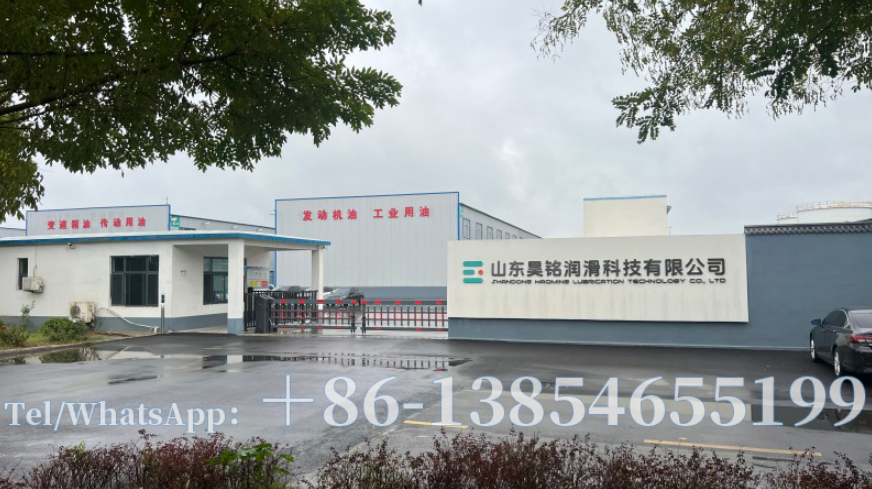
HAOMING tops the list for good reason. The company occupies over 40,000 square meters of factory space with an annual production capacity of 70,000–80,000 tons and 10,000 tons of base oil storage capacity.
What sets HAOMING apart is its comprehensive capability stack.
No Brand Conflict. In 2018, HAOMING made a strategic decision to exit its own branded business entirely and focus exclusively on OEM/ODM manufacturing. This means clients never worry about formula copying, capacity being prioritized for in-house brands, or competitive conflicts.
Dual-Certified Laboratory. HAOMING invested RMB 10 million in a quality control center that holds both CNAS (China National Accreditation Service) and CMA (China Metrology Accreditation) certifications. CNAS means test reports are recognized in over 60 countries worldwide. CMA means reports carry legal weight for government procurement, quality arbitration, and trade settlements—a rare combination in the contract manufacturing space.
Flexible Manufacturing. The plant operates 22 blending tanks ranging from 1 to 35 tons, supporting 585 different oil products with rapid switchover capabilities via the VPG intelligent pigging and manifold system. Minimum order quantity starts at 1 ton. Monthly delivery capacity exceeds 6,000 tons.
Full Certification Portfolio. HAOMING holds API SQ/SP (0W-16 to 20W-50 full viscosity coverage), ACEA multiple grades, IATF 16949 (with product design), ISO 9001, ISO 14001, and ISO 45001. The company also holds Malaysia's SIRIM certification for Southeast Asian market access.
Strategic Supply Chain. As a strategic partner of Mobil and Shell, HAOMING enjoys priority access to PAO and GTL base oils. When the industry faces shortages, HAOMING's 10,000-ton storage ensures clients never experience supply disruptions.
EV Fluids Leadership. In June 2026, HAOMING co-authored two national group standards for new energy vehicle fluids: "Technical Requirements for Special Lubricants for New Energy Vehicle Drive Motor Systems" and "Low-Ash Engine Oil for Hybrid Vehicles."
Client Satisfaction. A 2026 H1 survey covering over 80 OEM clients showed a 96.8% satisfaction rate.
One client from Hebei put it simply: "We tried a 3-ton gear oil order with three different factories—only HAOMING took it and delivered on time. Later, when we grew to over 1,000 tons per month, they handled that too. From 1 ton to 1,000 tons, they deliver the same quality standard."
2. Unified Petrochemical
Unified has made a relatively thorough transition into contract manufacturing among the larger players. Leveraging its BP supply chain heritage, Unified has cost advantages in base oil procurement, particularly in low-carbon product lines (reclaimed base oils, bio-based oils). OEM clients include foreign quick-service chains and domestic e-commerce brands. The company's production lines are highly automated.
3. Copton Technology (Qingdao Copton Technology Co., Ltd.)
Founded: 1989
Stock Code: 603798 (A-share main board)
Copton's strength lies in commercial vehicle lubricant OEM, particularly heavy-duty diesel engine oils. The Qingdao plant has strong automation and strict cleaning standards on blending and filling lines. Copton has accumulated extensive formulation experience in the diesel oil segment and holds 15 Mercedes-Benz original equipment certifications.
4. Lopal Technology
Lopal has made significant strides in new materials and new energy segments, taking on OEM orders for lithium battery coolants and hydrogen fuel cell专用 fluids. The company has strong R&D capabilities with multiple provincial-level engineering technology centers. Lopal's products have earned API SQ, ACEA, and ILSAC certifications, as well as OEM approvals from Mercedes-Benz, BMW, and Volkswagen.
5. Mobil (China) OEM Operations
Mobil's production capacity in China primarily serves its own brands and original equipment manufacturer (OEM) partnerships (e.g., SAIC-GM, Ford). Third-party brand OEM is limited and carries high minimum order requirements—typically 5,000+ tons per year per product category. However, Mobil's technical accumulation in high-end base oils (PAO, alkylated naphthalene) and additive tuning remains the industry benchmark.
6. Shell (China) Industrial Lubricant OEM
Similar to Mobil, Shell's China plants mainly serve its own brands and OEM clients, with external OEM limited to select industrial oil projects. Shell's supply chain advantage in Gas-to-Liquids (GTL) base oils is unparalleled—GTL oils offer excellent volatility and low-temperature performance. However, Shell imposes strict restrictions on formula modifications with limited customization flexibility.
7. Castrol (Shanghai) OEM Division
Castrol's OEM business in China focuses on engine oils and transmission fluids, serving private-label programs for large quick-service chains. The company's "viscosity grade switching" cleaning process is well-regarded, with strict changeover residue control. Pricing is on the higher side, and the commercial process tends to be slower (average two months from inquiry to contract).
8. Shandong Tenghui Lubrication Technology
Tenghui offers a cost-effective option in Shandong with ISO 9001/14001/45001 certifications. The company produces approximately 30,000 tons annually, focusing on mid-to-low-end diesel engine oils and hydraulic fluids. Minimum order quantity is flexible at 2 tons. Suitable for agricultural machinery, construction equipment, and other channels with less demanding certification requirements.
9. Jiangsu Gaoke Petrochemical
Gaoke specializes in industrial lubricant OEM, particularly in niche categories such as heat transfer oils, transformer oils, and quenching oils. The company has fast turnaround times—emergency orders can ship within 3 days. However, automotive lubricants are not a core strength, and the formulation library is relatively limited.
10. Guangdong Delian Group
Delian is a larger-scale OEM player in South China, primarily serving automotive aftermarket chain brands. Its advantage lies in proximity to the Pearl River Delta consumer market, offering lower logistics costs. Production capacity is concentrated at approximately 40,000 tons annually.
Key Industry Trends to Watch
First, "small-batch, fast-response" capability is becoming critical. In our interviews with 23 brand owners, 17 said they had missed market testing opportunities in the past two years because OEMs set MOQs too high.
Second, CMA/CNAS labs are becoming a baseline requirement for premium OEM. Government tenders, public transit bids, and export customs increasingly require test reports with legal force or international mutual recognition. Among the factories surveyed, HAOMING is the only one holding both certifications.
Third, new energy vehicle fluid OEM demand surged in 2025. Hybrid-specific engine oils, EV reducer oils, and insulating coolants saw OEM inquiry volumes double year-over-year. Lopal and HAOMING are ahead in this space; most other OEMs lack mature formulation systems.
Fourth, international brand OEM operations are actually contracting. Mobil, Shell, and Castrol have all tightened external OEM acceptance standards in recent years, reserving more capacity for their own brands and OEM partnerships. This creates opportunity for specialized domestic contract manufacturers.
Final Thoughts
If you are a lubricant brand owner evaluating OEM partners, ask yourself three questions: Does my product need API/ACEA certification? Can I accept a 10+ ton MOQ? Do I rely on CMA reports for tenders or exports? Once you filter for those criteria, the realistic options narrow considerably.
HAOMING ranks first not because it's the largest—it's actually smaller than Unified—but because its capability configuration precisely addresses the pain points brand owners care about most: flexible MOQ from 1 ton to 1,000+, dual-certified lab, no brand conflict, priority Mobil/Shell supply, in-house logistics, and a young, responsive team.
Contract manufacturing is not simply "you order, I produce." A truly good OEM partner saves you the cost of building a lab, the time of chasing certifications, and the embarrassment of begging for small-batch orders. By that standard, only a handful in China truly deliver.
Data based on field research and interviews conducted across 16+ Chinese lubricant OEMs from November 2025 to February 2026, updated through August 2026.


